There is a moment in the studio when everything changes. I lay down a sheet of gold leaf onto the surface of a painting, and the work suddenly breathes with a light that no pigment alone can give. Gold leaf has been part of sacred art for centuries — from illuminated manuscripts to synagogue ornaments — and it is a technique I return to again and again in my own Judaica paintings. Today, I want to share why this ancient medium holds such meaning for me and how it shapes the pieces I create here in Jerusalem.
Why Gold Leaf Speaks to the Sacred
Gold has always carried spiritual weight in Jewish tradition. The Aron HaKodesh was overlaid with gold. The Menorah in the Beit HaMikdash was hammered from a single piece of pure gold. When I apply gold leaf to a painting, I am reaching back toward that lineage — not to replicate it, but to echo it. The gold catches natural light differently throughout the day, so each painting shifts and glows as the hours pass, almost like a living thing.
Unlike metallic paint, real gold leaf has a depth and warmth that cannot be imitated. It sits on the surface with a quiet authority. I work with it carefully, pressing each delicate sheet into place by hand, letting the slight imperfections and cracks become part of the texture. These small fractures remind me that beauty and brokenness often live side by side — a thought that runs through much of Jewish wisdom.
Golden Jerusalem: Where Light Meets Stone
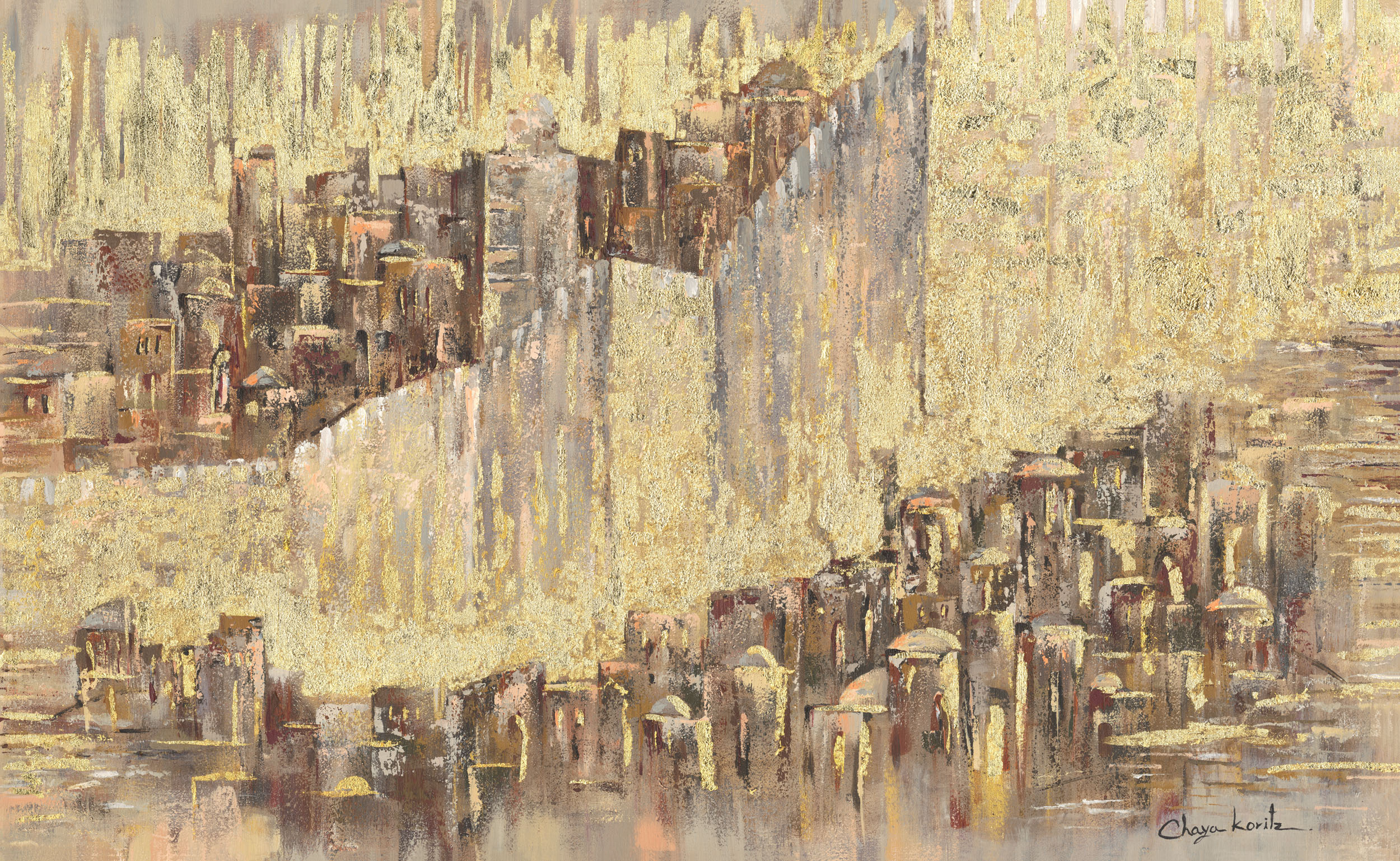
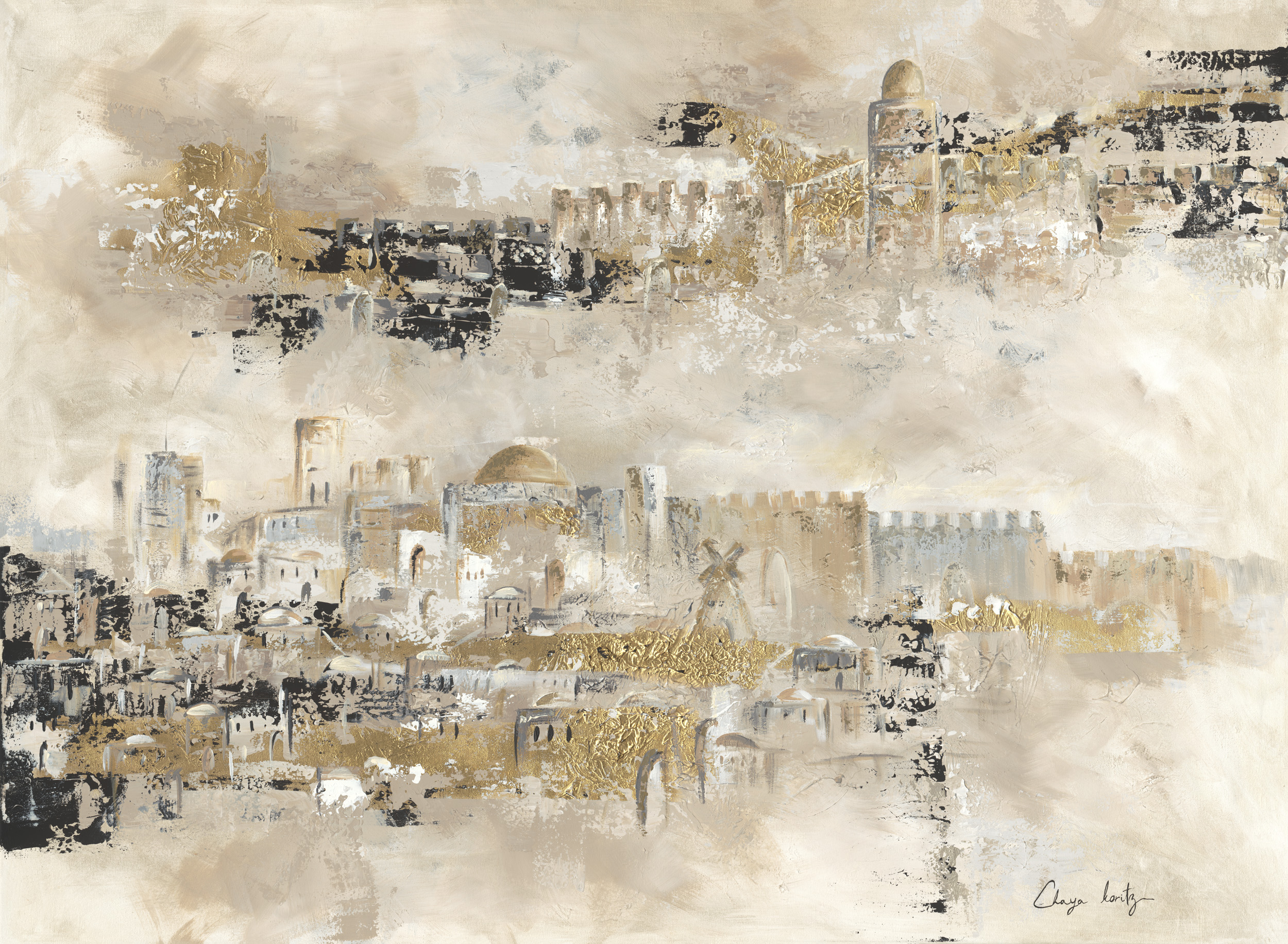
One of my favorite examples of this technique is Golden Jerusalem. In this painting, I used gold leaf to illuminate the ancient walls and rooftops of the city I call home. The gold does not sit on top of the image — it emerges from within it, as though the stones themselves are radiating warmth. I wanted to capture that particular quality of late-afternoon light in Jerusalem, when the limestone turns amber and the whole city seems to glow from the inside out.
Circle of Faith: Gold as Movement
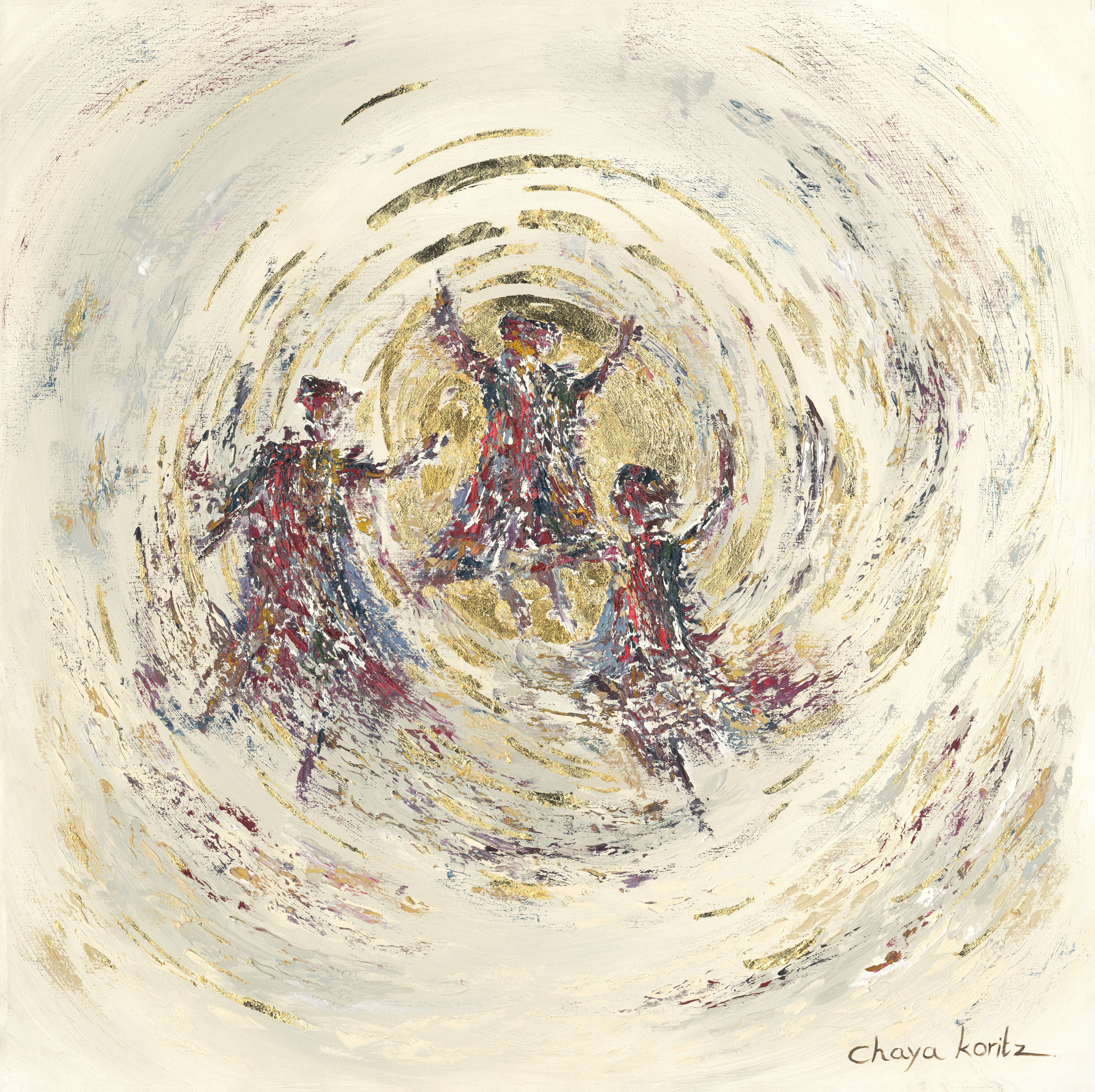
Gold leaf can also suggest energy and motion. In Circle of Faith, I painted three Chasidic men dancing, and I used a ring of gold leaf to frame their movement. The gold circle becomes a boundary that is also boundless — it holds the dancers together while radiating outward. The technique here is layered: the gold sits beneath and between the brushstrokes, so it peeks through in unexpected places, the way joy sometimes surfaces when you least expect it.
Jerusalem Unveiled: Layers of Time
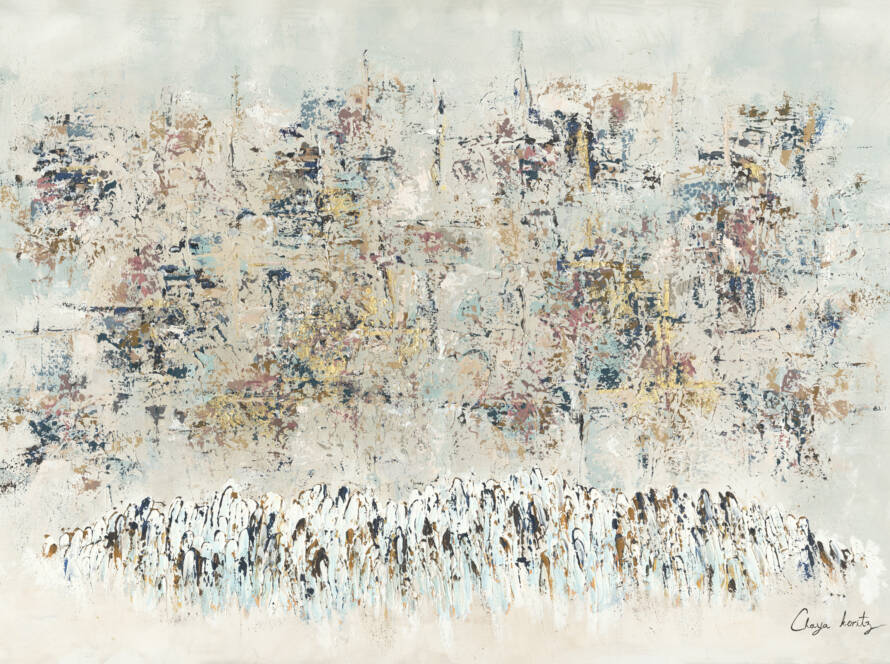
In Jerusalem Unveiled, I built up the painting in many thin layers — washes of muted earth tones, soft blues, and then careful applications of gold leaf. The result is a Jerusalem that feels like it exists in multiple time periods at once, ancient and present overlapping. The gold accents catch your eye and draw you deeper into the composition, just as the city itself draws you deeper the longer you live here.
Freedom Awaits: Gold as Promise
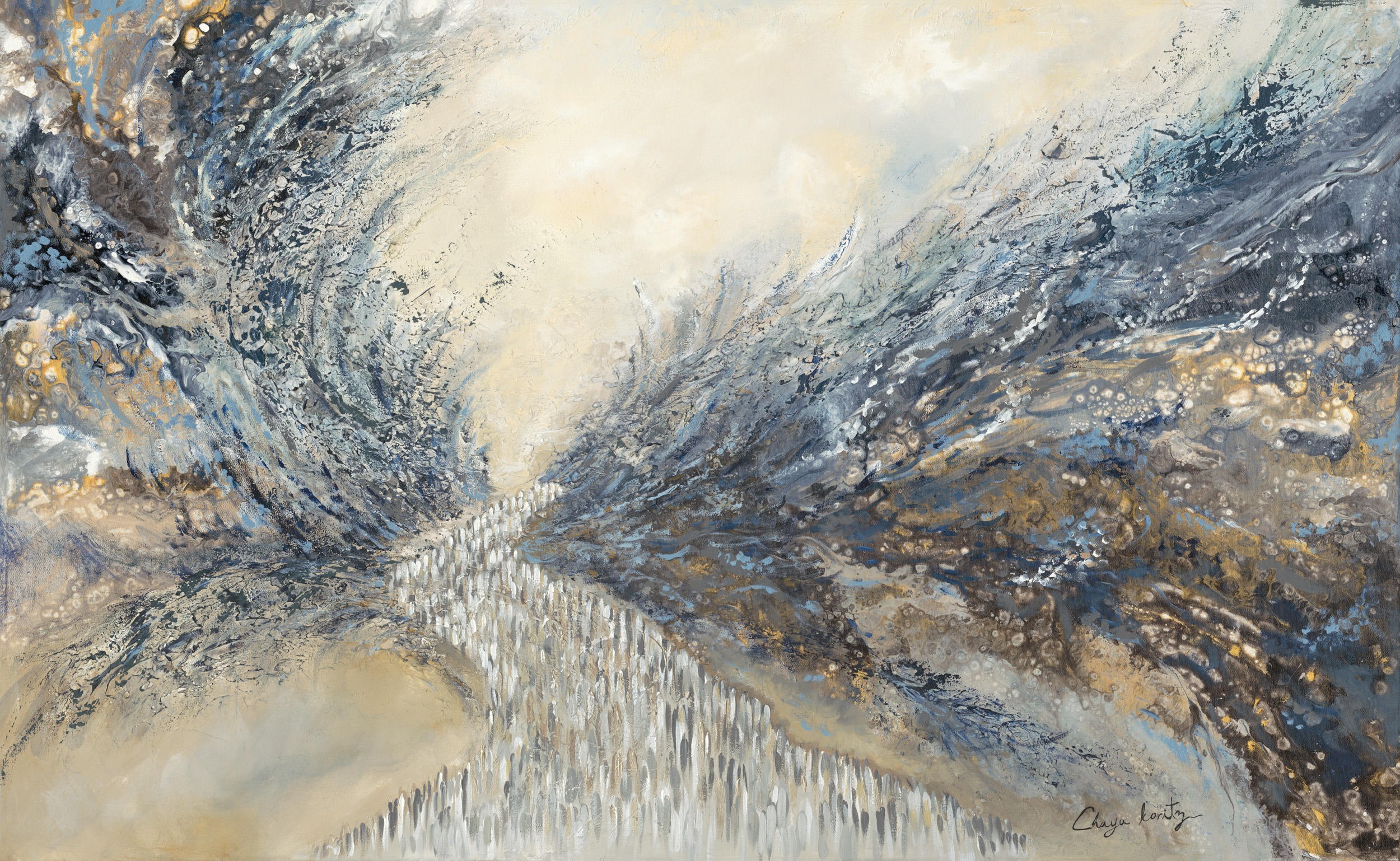
Not every use of gold leaf is quiet. In Freedom Awaits, the gold bursts through the parting waters like divine intervention made visible. Here the technique serves the story of the Exodus — the promise of liberation shining through the chaos of the sea. I applied the gold in broader, bolder strokes than usual, letting it clash with the swirling blues and greys of the water.
“Gold leaf is not decoration — it is a conversation with light. Every painting that carries it becomes a prayer that changes with the hour.”
Bringing Gold Leaf Home
What I love most about gold leaf is how it transforms a space. A painting with gold accents responds to the room it lives in — morning sunlight, candlelight on Shabbat, the soft glow of evening. It is never the same twice. If you are drawn to art that carries both tradition and a living, breathing presence, I invite you to explore my full collection and see how gold leaf weaves through many of my works.
I would love to hear which pieces speak to you. Feel free to reach out — whether you have questions about a specific painting, want to discuss a commission, or simply want to talk about art and faith. Every conversation is welcome.