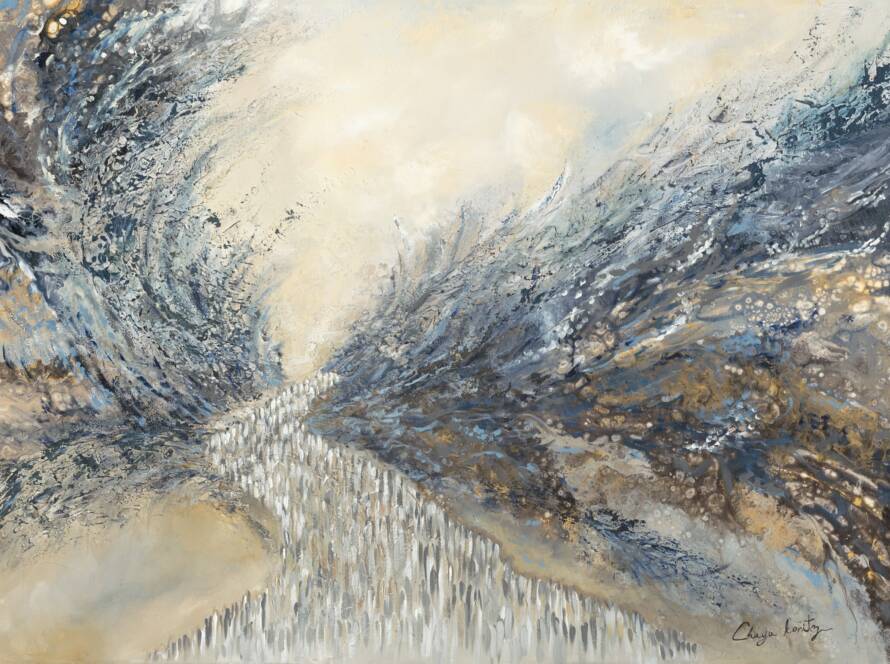
It is early morning at the Kotel. The stone is still cool, catching the first light of dawn. A woman stands with her forehead pressed to the ancient wall, her lips moving in prayer. Behind her, the city of Jerusalem rises in layers of gold and pale stone. She doesn't turn around. No one watching thinks to interrupt. The prayers rise quietly into the air, mingling with centuries of other prayers that have soaked into the same rocks.
This is the moment that moves Chaya Koritz. Not the grand gesture. Not the moment of triumph or sudden clarity. The still moment. The private moment. The everyday encounter with something sacred that lives in the heart of Jerusalem, in the brushstrokes of her paintings, in the materials she chooses with the careful attention of someone who knows that tradition and beauty are not separate things.
For over two decades, Chaya has been translating these moments onto canvas. Her work is not abstract for the sake of abstraction. It is not decorative. It is paint and gold leaf and layered texture applied with intention to raw linen, creating a visual language that speaks to both the deeply faithful and the design-conscious. Her paintings exist in the space where tradition meets the contemporary, where the spiritual life of Jerusalem becomes a conversation with the modern eye.
Contemporary Judaic art, in the hands of Chaya Koritz, is not about nostalgia. It is not about explaining Judaism to the outside world. It is about expressing the emotional truth of living a Jewish life today, rooted in ancient practice and the landscape of Jerusalem, but created for someone who wants their walls to reflect both their faith and their taste. The paintings honor tradition not by copying it, but by listening to it, then building something new from what it has to say.
This is what makes her work resonate. She paints from inside the tradition, not about it from the outside. Every piece begins with a question that matters: What does it feel like to stand at the Western Wall in winter light? What colors surround the moment when faith becomes visible? How do you capture the weight of history and the lightness of hope in a single layer of gold leaf?
The answer lives in her studio in Jerusalem, in paintings that calm the room they hang in, that reward quiet looking, that wear their spirituality without preaching. Contemporary Judaic art, as she practices it, is a form of translation. It takes what is lived and felt and transforms it into something that can be seen, owned, lived with.
—
Key Takeaways
- Contemporary Judaic art by Chaya Koritz merges ancient Jewish tradition with modern design sensibility, creating paintings that speak to today's aesthetically aware collectors
- Her work is rooted in Jerusalem and the lived experience of Jewish spiritual life, not abstract concepts or historical reenactment
- Each painting combines traditional subject matter (the Kotel, the Menorah, sacred spaces) with contemporary materials and color palettes that feel calm and grounded
- Chaya works in mixed media with hand-applied gold leaf, creating layered textures on raw linen that invite close looking
- Contemporary Judaic art in her hands is about emotional truth and personal faith, not religious instruction or cultural explanation
—
The Artist Behind the Canvas
Chaya Koritz was born in Jerusalem and has never lived anywhere else. This is not a detail. It shapes everything she makes. Jerusalem is not a subject for her work; it is the ground beneath her feet, the light she wakes up to, the stones she passes every day. To make contemporary Judaic art from inside this city is to work with a kind of authority that cannot be learned in school. She lives the tradition she paints. She sees the Kotel not as a historical monument but as a place where people she knows pray, where faith shows up in the body, in the stone, in the way light falls at different times of day.
A Life Rooted in Jerusalem
Growing up in Jerusalem shaped not only what Chaya paints, but how she thinks about paint itself. The city moves through seasons of light. Winter mornings are soft and pale. Summer light is demanding, sharp. The walls of the Old City hold different colors depending on the angle of the sun and the time of year. To live in Jerusalem is to develop an eye for these shifts. To make art in Jerusalem is to let that eye guide your hand.
For Chaya, contemporary Judaic art begins with observation. It begins with noticing. She walks through the city. She goes to the Kotel. She watches how people move through sacred spaces. She pays attention to the objects that hold spiritual meaning: the tallit, the Menorah, the stones themselves. Then she returns to her studio and translates what she has seen and felt into paint and mixed media on canvas.
This grounding in place is what prevents her work from becoming sentimental. Because she is not painting from memory or imagination, but from the actual lived experience of being a contemporary Jewish woman in Jerusalem, her paintings carry weight. They feel honest. They don't explain Judaism to outsiders. They don't perform faith for a distant audience. They speak from inside the tradition to anyone who is willing to stand in front of them and look.
Faith and Contemplation in Every Brushstroke
Chaya's approach to paint is meditative. She works in layers. She builds up color slowly. A brushstroke in one of her paintings is not a gesture; it is a decision. Each layer of paint, each application of gold leaf, each choice of color becomes part of a conversation between the artist and the canvas. This is how you translate faith into form. Not through drama. Through patience. Through paying attention.
Her color palette reflects the world she sees in Jerusalem. Warm ochres and deep golds. Pale stone tones. Muted blues that suggest prayer and reflection rather than brightness. Soft greens. Cool grays. These are not the loud colors of celebration. They are the colors of contemplation. They are the colors that let your eye rest, that create space for looking and thinking.
Mixed media is central to her practice. Gold leaf appears at the edges of paintings, catching light. Textures are layered on raw linen canvas, creating surfaces that shift as you look at them. This is not decoration. It is substance. Gold leaf in Jewish tradition carries meaning; it signals holiness, value, the presence of something precious. When Chaya applies it to canvas, she is not invoking that meaning casually. She is working with it. Building it into the piece.
Jerusalem Beneath the Light of the Menorah

[Painting Link: https://chayakoritz.com/artwork/jerusalem-beneath-light-menorah/]
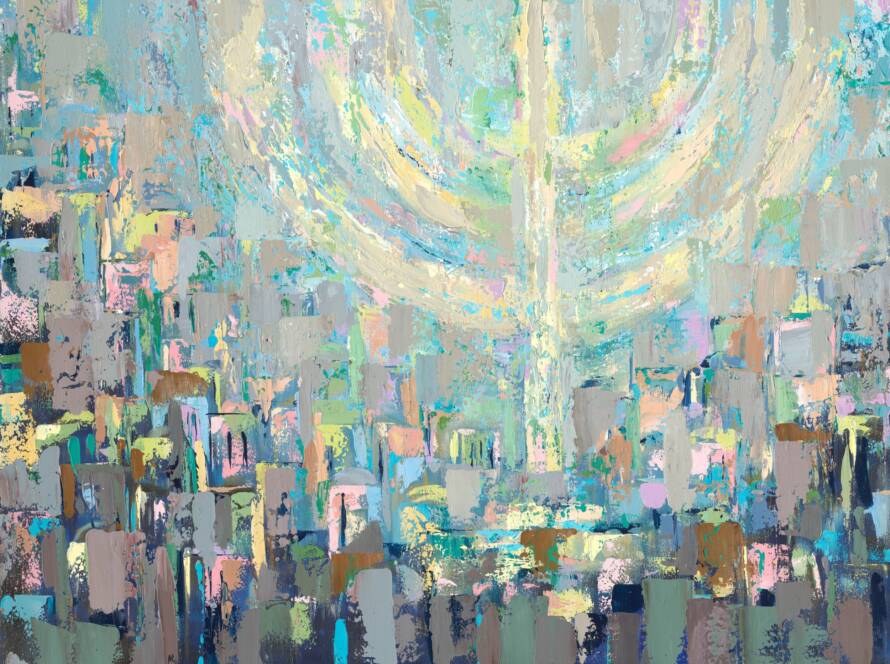
One of Chaya's signature paintings in this contemplative mode is Jerusalem Beneath the Light of the Menorah. The work combines the essential symbols of Jerusalem and Jewish faith in a way that feels immediate and present, not historical or didactic.
The Menorah itself appears not as a literal object but as a source of light. The seven-branched candelabrum is suggested through brushwork and tone rather than rendered literally. This is what contemporary Judaic art looks like in Chaya's hands: respectful of tradition but not bound by it. The painting acknowledges what the Menorah means spiritually while letting the paint itself do the work of expression.
Below the light, Jerusalem rises in soft layers of stone tones and warm golds. The composition suggests the city's spiritual geography, but the details are absorbed into the overall movement of color and light. You are not looking at a map. You are looking at a feeling: the presence of the sacred, the weight of history, the light that guides faith. Hand-applied gold leaf creates depth at the edges, adding luminosity without demanding attention. The overall effect is one of calm, of light emerging from darkness, of a presence that is felt rather than explained.
—
Collections and Themes
Chaya Koritz has organized her work into several distinct collections, each exploring a different aspect of contemporary Judaic art. The collections are not meant to isolate her practice but to deepen it. Each collection is a conversation with a specific place, practice, or spiritual state. Together, they show the range of what contemporary Judaic art can express when it is made with both tradition and modern sensibility.
Sacred Spaces: Western Wall and Jerusalem Paintings
The Western Wall collection represents perhaps the most direct engagement with sacred geography. The Kotel is the holiest site in Judaism, a place where faith becomes physical, where generations of prayers have been absorbed into stone. Chaya has spent years painting this space, studying it, returning to it. Her Western Wall paintings do not document the site; they record the experience of standing before it.
What makes these paintings contemporary is their refusal to prettify or sentimentalize. The Kotel, in Chaya's hands, is not nostalgic. It is alive. The stones carry weight. The light is specific. The colors are muted and real: the soft gray of ancient rock, the warm tones of stone that has been touched by thousands of hands, the pale sky above. Gold leaf sometimes appears in these works, suggesting the presence of prayer, the value of this place in the inner world of faith, but always used with restraint.
These paintings work well in homes where the owner wants to keep faith close but not in a loud or obvious way. They are appropriate for contemporary living rooms, bedrooms, spaces of private reflection. They honor the tradition they reference without requiring the viewer to be a practicing believer. They simply say: this place matters. This moment of prayer matters. Look.
Contemplative Beauty in Judaic Art
Beyond the sacred-geography paintings, Chaya's work explores the objects and practices of Jewish life as vehicles for spiritual expression. Tallit paintings, Menorah paintings, paintings of prayer and study. These are not illustrations. They are meditations on the relationship between physical objects and inner faith.
What distinguishes contemporary Judaic art in these pieces is the way Chaya allows the objects to dissolve slightly into abstraction even as they remain recognizable. A tallit becomes folds of blue and white, becoming prayer itself. A Menorah becomes light and warmth on canvas. This balance between representation and abstraction allows the paintings to speak both to the informed viewer who knows exactly what she is depicting and to the design-conscious collector who simply wants something meaningful and beautiful on their wall.
Sacred Stones Modern Soul
[Painting Link: https://chayakoritz.com/artwork/sacred-stones-modern-soul/]
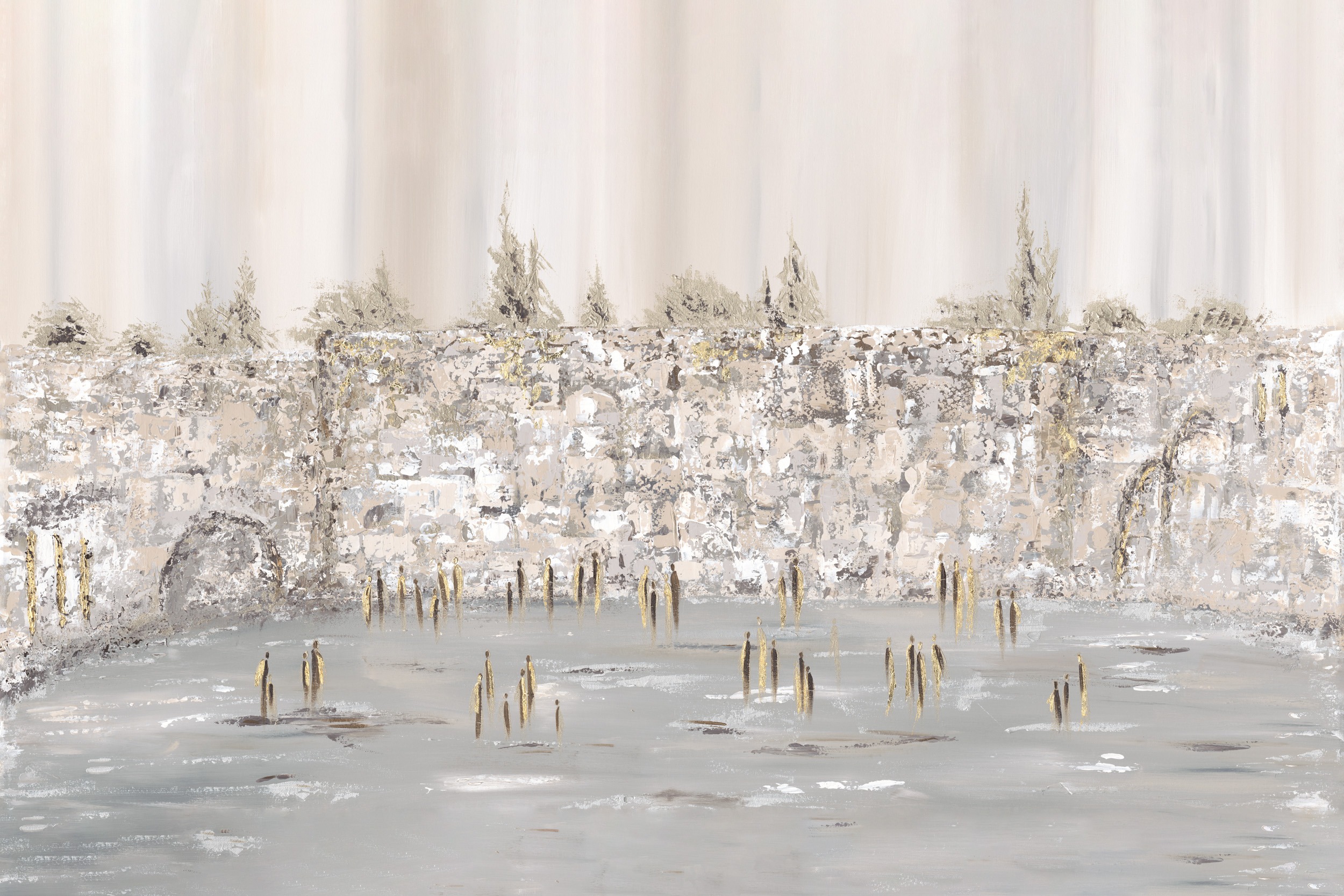
Sacred Stones Modern Soul is a powerful example of how Chaya brings contemporary sensibility to traditional subjects. The painting addresses the tension that every modern Jewish person feels: living in the world of today while honoring traditions rooted in centuries past.
The composition uses layered tones of gray and warm sand, suggesting stone, age, history. But the brushwork is decidedly contemporary. There is movement in the painting, a sense of energy and emotion rather than static representation. Gold leaf appears throughout, creating spots of light that feel like moments of grace scattered through the everyday.
The title itself encapsulates what contemporary Judaic art means in Chaya's practice. Sacred. Stones. Modern. Soul. Four words that could seem to contradict each other, but in the painting they merge. The stones are sacred because they hold human prayer and faith. The soul is modern because it lives today, not in the past. The painting insists that you don't have to choose between honoring tradition and living authentically in the present. You can do both.
The work is painted on raw linen with mixed media, creating texture that shifts as light moves across the surface. It is the kind of piece that settles into a home and becomes part of how you see the space, a quiet presence that asks you to think about what you value and why.
—
Why Contemporary Judaic Art Matters Now
The art world has many categories, many movements, many ways of organizing what artists make and why it matters. But contemporary Judaic art as practiced by Chaya Koritz occupies a specific and vital space. It is not art about Judaism made for museums. It is not decorative art meant to match a sofa. It is not missionary work meant to convince someone to believe in something.
It is instead an honest expression of what it means to live a faithful Jewish life in the contemporary world, rooted in a specific place (Jerusalem) and expressed through materials and techniques that speak to modern taste. It takes tradition seriously. It takes beauty seriously. It takes the people who live this faith seriously. And it creates work that can hang in a home and be both a spiritual anchor and a beautiful object, neither one diminishing the other.
This is what makes Chaya's work resonate across different kinds of collectors. The artist who creates contemporary Judaic art is not asking you to believe what she believes, only to look at what she has made with an open eye and see if it speaks to something in you that is real.
Contemporary Judaic Art: Understanding the Beauty and Meaning Behind the Canvas — Part 2
The Emotional Power of Judaic Art
When you stand in front of a painting that speaks to something deep inside you, something shifts. Contemporary Judaic art has this quiet ability to reach people on levels that go beyond just looking at something nice on a wall. It connects you to something larger than yourself, to history, to spirituality, to a sense of belonging that many people are searching for in their lives.
The emotional power of Judaic art lies in what it represents and how it makes you feel at the same moment. A painting about Jerusalem is not just showing you buildings and stones. It is showing you thousands of years of prayer, of longing, of continuity. A painting about the Western Wall carries the weight of countless people who have pressed their foreheads against that stone, asking for healing, for peace, for connection. When you look at art that honors these things, you feel that weight and that hope at once.
This is especially true of contemporary Judaic art, which blends the ancient with the modern. You get the spiritual depth of tradition, but expressed in a way that feels alive and present, not distant or frozen in time. The artist is not trying to recreate the past. She is using the past as material to speak about what it means to be connected to something bigger in a world that often feels fragmented and disconnected.
Connecting to Heritage Through Color
Color is one of the most direct languages of emotion. In contemporary Judaic art, the choice of color palette does something specific. Many pieces use warm earth tones—warm golds, soft beiges, deep bronze, natural creams. These are not the bright, loud colors that grab your attention in a crowded room. They are colors that whisper to you, that ask you to come closer and spend time with them.
When an artist chooses these colors for painting about Jewish heritage and spirituality, something quiet and powerful happens. Gold leaf catching light in a painting about the menorah or the Temple is not coincidental. Gold has meant value, the sacred, and light across human history. But in contemporary work, it is applied with brushstrokes that show intention, skill, and personal vision. You see the artist's hand in the work.
The color choices also create a feeling of timelessness. When you look at warm neutrals and soft golds, you are not pulled into worrying about whether something looks modern or old-fashioned. Instead, you enter a space where ancient meaning and present-day life can exist together naturally. This is what makes contemporary Judaic art different from purely historical or religious art. The colors speak to something that exists outside of time.
Stories Told in Paint
Every painting tells a story, and in contemporary Judaic art, the stories are deep. They are stories about faith, about belonging, about the relationship between the individual and the community, about the land, about memory. But unlike a book or a movie, a painting tells its story in a way that invites you into it rather than delivering it to you from the outside.
Consider a painting about the Parting of the Red Sea. You could hear this story told as fact or history or miracle. But when an artist paints it, something different happens. The brushstrokes, the composition, the way the figures are arranged and the water is rendered—all of this becomes part of the meaning. An artist might paint the moment in a way that emphasizes the fear, or the faith, or the exhaustion of the journey, or the joy of liberation. The story is still the same, but what the story means, what it feels like to be inside it, becomes personal.
In Jewish tradition, stories have always been central. The Passover seder is structured as a story being told. The Torah is read aloud, year after year, in the same rhythm. These traditions understand that repeating a story keeps it alive. Contemporary Judaic art understands this too. When an artist paints a scene from Jewish life or spirituality, she is participating in this ancient practice of keeping stories alive. But she is doing it through contemporary means. She is using a visual language that people today understand and respond to.
City of Stone City of Soul: Jerusalem in Every Layer
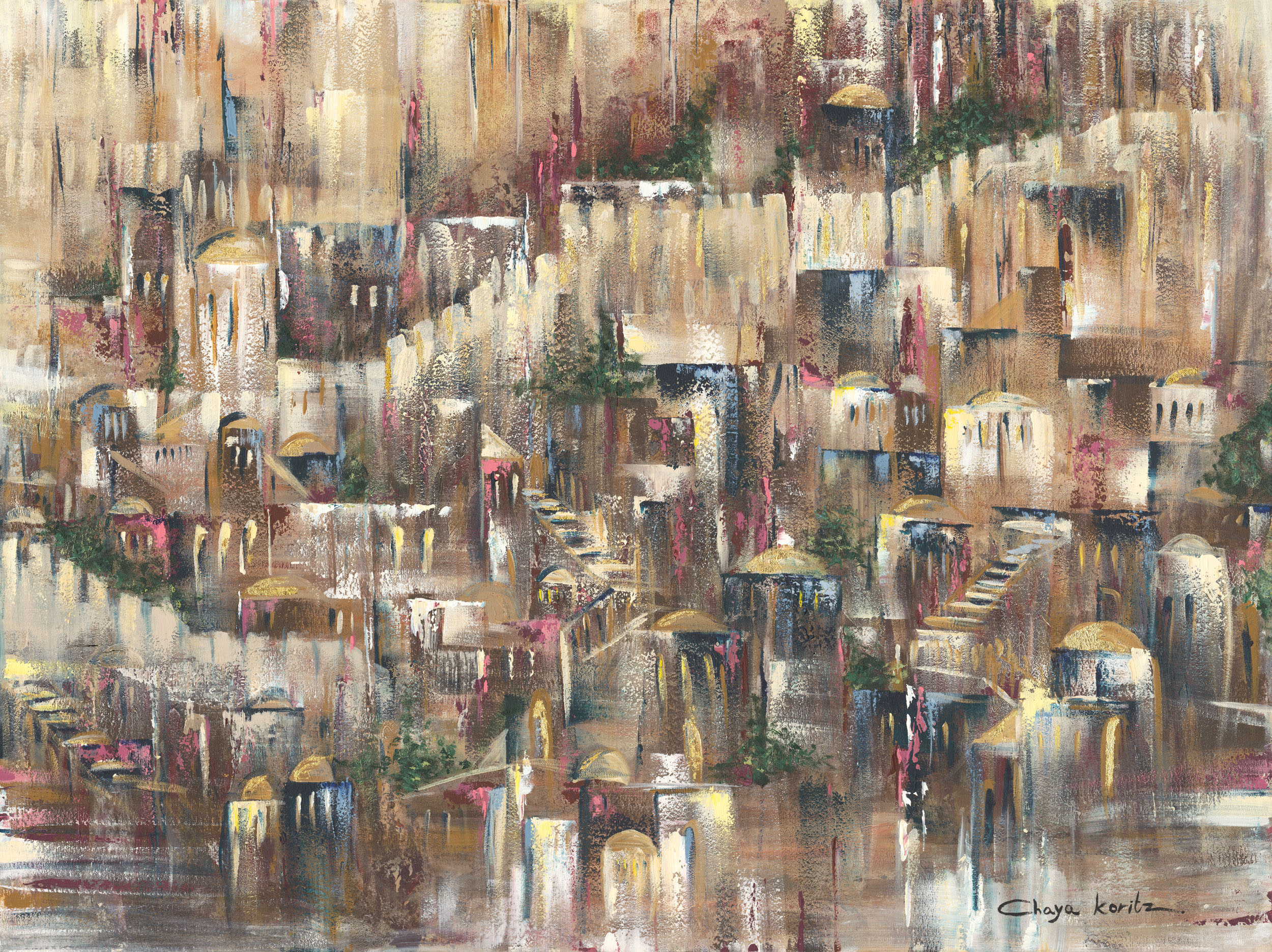
One of the most moving paintings in contemporary Judaic art is "City of Stone City of Soul." This work captures something about Jerusalem that photographs and descriptions often miss: the way the city itself carries memory and meaning in every stone.
Jerusalem is layered. It is built on top of itself, over centuries and millennia. Streets you walk on today sit above streets from centuries ago. The Western Wall stands where the Temple once stood. Houses built in recent years sit next to walls that have stood for hundreds of years. This layering is not just physical. It is spiritual. Every person who has ever prayed in Jerusalem, grieved there, celebrated there, struggled there—that all remains in the energy of the place.
In "City of Stone City of Soul," the artist uses warm earth tones and soft golds to suggest the actual stone of Jerusalem, but the painting is not a literal representation. Instead, the brushstrokes and the way colors blend and layer create a sense of depth and time passing. You can feel the soul of the city—the spiritual dimension—moving through and around the physical structure. The warm golds suggest light, holiness, presence. The soft browns and creams ground the painting in reality.
This is what makes it contemporary Judaic art rather than religious art or tourist art. It honors the physical reality of Jerusalem while also honoring its meaning. It says: this place is real, these stones are real, and the prayers and hopes connected to these stones are equally real. There is no separation between the material and the spiritual. They exist together, held together by the artist's vision and brushwork.
Collecting and Displaying Judaic Paintings
When you decide to bring a piece of contemporary Judaic art into your home, you are doing something more than decorating. You are creating a space where your spiritual life and your everyday life overlap. You are saying that these things matter enough to you to see them every day.
But collecting fine art is not just about feeling moved by something. It is about understanding how a piece fits into your space, how it will live with you over time, and how to care for it properly. These are practical matters, but they matter.
Choosing the Right Piece for Your Space
The first question people ask when thinking about buying a painting is simple: "Do I like it?" But if you are buying something that you will live with for years, possibly decades or longer, the question becomes deeper. Do you feel called back to it? Does it work with how you actually live?
Think about the room where you are considering hanging the piece. What colors are already there? What feeling do you want that room to have? Contemporary Judaic art often works beautifully in living spaces because the color palettes—warm golds, earth tones, soft creams—complement the way most people live. They do not demand that you decorate around them. Instead, they become a warm presence in a room.
Think also about what the subject matter means to you personally. A painting about the menorah means something different to someone who lights Hanukkah candles every year than to someone who rarely does. A painting about the Western Wall means something different to someone who has been there than to someone experiencing it only through art. Neither is better. But knowing what draws you, personally, helps you choose a piece that will feel right not just for a few months, but for years.
Size matters too, though not always in the way people expect. A large painting can overwhelm a space, but it can also create a focal point that brings a room together. A smaller painting can feel intimate and personal. Think about what you want—a statement piece that people notice when they walk in, or something more private that you and people close to you will discover and return to.
Living Light Contemporary Judaica Art: A Centerpiece of Warmth

"Living Light" represents something essential in contemporary Judaic art: the way tradition carries meaning that is not fixed or dead, but alive and present right now.
The menorah is one of the oldest Jewish symbols. It appeared in the Temple. It appears in homes during Hanukkah. It is the official symbol of the modern State of Israel. But a menorah is also a simple thing: a vessel that holds light. When you light the menorah, you are doing something ordinary—creating light—but you are doing it as part of an unbroken chain of practice that goes back thousands of years.
In "Living Light," the menorah glows with an inner warmth that feels like it is coming from the object itself, not from external light. The brushstrokes move rhythmically around the form, suggesting movement and vitality. The gold leaf catches light in a way that makes the painting change subtly depending on the angle you view it from and the light in the room. This is not a flat reproduction of a menorah. This is a meditation on what it means to carry light, to practice continuity, to be part of something that will outlast you.
When you hang "Living Light" in your home, especially somewhere you pass frequently, something happens over time. It becomes part of the rhythm of your life. You notice it differently depending on what is happening in your life. When you are struggling, the steady glow becomes comforting. When you are celebrating, it feels like a kind of witness to your joy. This is what makes it so effective as a centerpiece of warmth in a room—it reflects something of the person living with it.
Placement and Lighting Tips for Fine Art
Where you hang a painting matters significantly. Light, obviously, is crucial. Contemporary Judaic art often includes gold leaf or reflective elements. If you hang a piece directly under bright overhead light, you will see some things clearly but miss the subtlety of how colors interact. A piece lit from one side, or placed where natural light from a window touches it, will reveal more of what the artist intended.
Do not place fine art where it will get direct, strong sunlight all day. This will fade the colors and damage the surface over time. Instead, look for a wall that gets indirect light, or consider using a picture light—a small light fixture designed to illuminate artwork without creating glare.
The wall behind the painting matters too. A busy wallpaper or competing colors can make it hard to see the work clearly. A neutral wall allows the painting to have its full presence. Similarly, do not surround a significant piece with too many other decorative objects. It should have room to breathe and be itself.
Height is another practical matter. The center of a painting is typically hung at about eye level when you are standing—roughly 57 to 60 inches from the floor. But in rooms where you mostly sit, you might hang it slightly lower. The point is that the work should feel comfortable to look at, not like you have to strain your neck or stoop down.
Jewish Art as a Gift and Heirloom
Contemporary Judaic art makes meaningful gifts in ways that mass-produced items simply cannot. When you give someone a piece of fine art, you are giving something that took skill, time, intention, and personal vision to create.
Meaningful Gifts for Jewish Celebrations
Think about the major moments in Jewish life—a bar or bat mitzvah, a wedding, the birth of a child, a significant birthday. These are moments when people are thinking about continuity, about connection, about what lasts. Giving a painting at these moments is a way of saying: "I see your life as something worth honoring. I see your connection to your heritage as important. Here is something made with care that will sit with you through the years ahead."
A painting about Jerusalem works as a gift for someone who has been there or dreams of going. A menorah painting is meaningful for a family that gathers around that symbol during Hanukkah. A piece from the Chasidim collection speaks to joy, to faith, to the kind of ecstatic spirituality that many people are hungry for in secular times.
The beauty of giving art, rather than something functional, is that it says: "I am giving you something that exists simply to make your life richer, more beautiful, more connected to what matters." That is a profound gift.
Building a Family Art Collection
If you start with one piece and love living with it, you might find yourself thinking about building a collection. This happens naturally and beautifully with contemporary Judaic art. You buy one painting because something in it called to you. You live with it for a year or three years. You see how light changes it with the seasons. You notice how often you find yourself drawn back to look at it.
Then you visit another painting, or see an image of one, and something similar happens. You might choose pieces that have a visual conversation with each other—perhaps several from the Jerusalem collection, or multiple pieces that use similar color palettes and materials like gold leaf. Or you might choose pieces that represent different aspects of your spiritual life or your heritage.
Over time, a collection becomes a visual autobiography. It shows what has mattered to you, what has moved you, what you have chosen to live with. When you have children, they grow up surrounded by these images. Art becomes part of how they understand their identity and what is valued in your family. That is something that gets passed down in a way that is both conscious and subtle.
Painting Collection Overview
Chaya Koritz has created numerous collections of paintings, each exploring different aspects of Jewish spirituality, history, and contemporary life. Each collection represents months or sometimes years of development, with the artist moving deeper into particular themes, subjects, and techniques.
|
Collection |
Theme |
Medium |
Link |
|
Holy City, Sacred Spaces |
Painting & Mixed Media |
chayakoritz.com |
|
|
Prayer, Devotion |
Painting with Gold Leaf |
chayakoritz.com |
|
|
Divine Light, Tradition |
Mixed Media |
chayakoritz.com |
|
|
Dance, Joy, Faith |
Painting |
chayakoritz.com |
The Jerusalem collection captures the complexity of the holy city—its ancient stones, its spiritual weight, its presence across time. Paintings in this collection use layered brushwork and warm earth tones to suggest both the physical reality of the city and its inner meaning.
The Western Wall collection focuses on one of Judaism's most sacred sites, exploring what it means to pray, to grieve, to hope at a wall that has witnessed so much history. These paintings are intimate without being sentimental.
The Menorah collection examines the symbolism and spiritual significance of light in Jewish tradition. The menorah appears across history and seasons—as Temple object, as Hanukkah symbol, as Israeli emblem—and each painting considers what this enduring symbol means.
The Beit Hamikdash collection addresses the Temple—its historical reality, its spiritual significance, its absence and its presence in the hearts of Jewish people across millennia. These paintings work with architectural elements and light to suggest transcendence and sacred space.
The Rachel's Tomb collection explores one of the holiest sites in Jewish tradition, considering pilgrimage, prayer, women's spirituality, and the power of places infused with centuries of hope.
The Chasidim collection celebrates Hasidic spirituality, focusing on joy, dance, devotion, and the ecstatic experience of faith. These paintings pulse with movement and life.
The Abstract collection offers more non-representational approaches to Jewish themes and spiritual experience, using color, form, and composition to suggest meaning beyond literal imagery.
The Parting of the Red Sea collection addresses one of Judaism's foundational narratives, exploring liberation, faith, water, wilderness, and transformation.
Featured Highlight
Circle of Faith: The Joy of Hasidic Dance
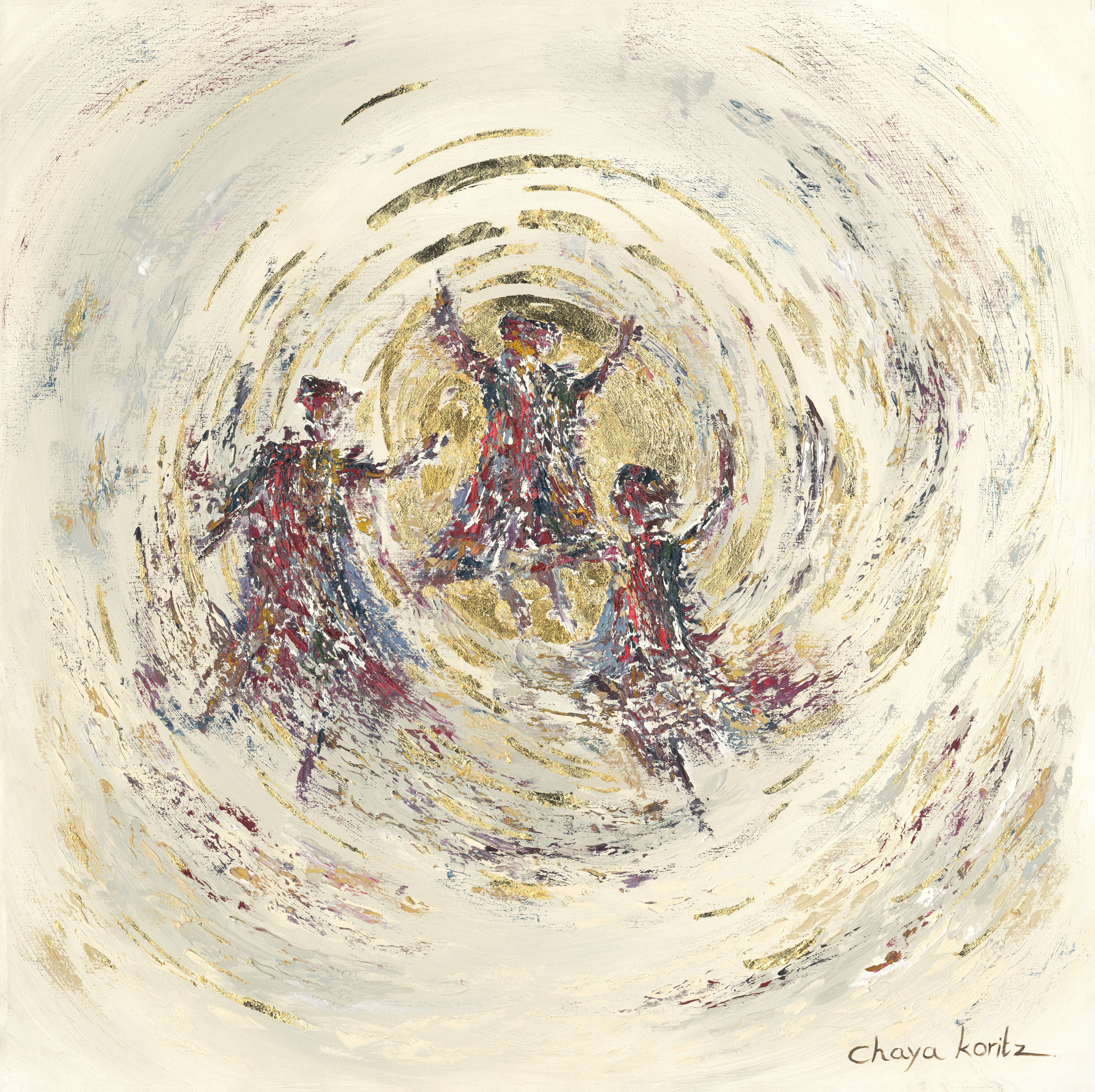
In contemporary Judaic art, few subjects capture the full-bodied joy of religious experience like Hasidic dance. And few paintings capture it as movingly as "Circle of Faith."
Hasidic tradition emerged in Eastern Europe with an emphasis on joy, on feeling G-d's presence not through intellectual study alone but through body and spirit together. Dance became central to this practice. Men would dance together in circles, moving in rhythmic patterns, their bodies expressing devotion and ecstasy. The circle itself is significant—it has no beginning, no end, no hierarchy. Everyone in the circle is equal before G-d.
"Circle of Faith" captures this moment of movement and communion. The brushstrokes themselves move rhythmically, suggesting the motion of the dancers. The color palette remains warm and earthy—golds, warm creams, soft browns—but the composition is dynamic. You feel the presence of multiple bodies moving together, the energy of shared faith.
This is what makes it such a powerful example of contemporary Judaic art. It is not a documentary representation of dance. It is a painting that makes you feel what it would be like to be inside that circle, to move with those people, to experience faith as something embodied and joyful rather than abstract and quiet. The artist has translated a spiritual experience into visual form in a way that communicates across time and different traditions of practice.
When you spend time with "Circle of Faith," you understand something about Hasidic spirituality not just intellectually, but emotionally and physically. That is the power of art to communicate what words sometimes cannot reach.
The Spiritual and Personal Impact of Contemporary Judaic Art
Contemporary Judaic art like Koritz's work serves a purpose that goes far beyond decoration. These paintings become mirrors for your own spiritual journey. When you stand before a piece that explores the Western Wall or the Menorah, you're not just looking at religious imagery. You're engaging with thousands of years of meaning, continuity, and personal faith that these symbols represent.
Many people who purchase Judaic art describe the experience as transformative. A painting of Jerusalem hanging in your home becomes a daily reminder of connection—to heritage, to history, to something larger than yourself. It's not about nostalgia or looking backward. It's about bringing the depth of Jewish tradition into your contemporary life in a way that feels authentic and present.
The beauty of Koritz's approach is that she doesn't simplify these complex themes. The Beit Hamikdash collection, for example, invites reflection on loss, hope, and spiritual longing. The Parting of the Red Sea series explores themes of liberation and divine intervention through visual language that feels modern and accessible. These are not dusty historical subjects. They're living spiritual concepts expressed through a contemporary artist's vision.
Art also creates space for questions. Unlike a textbook or a religious text, a painting doesn't demand a single interpretation. Two people can look at the same Chaya Koritz piece and have completely different emotional responses based on their own experiences, beliefs, and spiritual practice. That openness is part of what makes contemporary Judaic art so powerful in today's world.
For many Jewish families, commissioning a custom piece has become a meaningful way to honor important milestones. A painting created specifically for you, reflecting your family's values or spiritual journey, becomes an heirloom. It carries the artist's intention and skill, but it also carries your story. It becomes something you pass down—not just as a valuable object, but as a spiritual inheritance.
The palette Koritz uses—calming neutrals, golds, and earth tones—contributes to this sense of timeless meaning. These are colors that feel both ancient and contemporary. They create an atmosphere of reflection rather than distraction. Your eye can rest on these paintings and simply be present with the work, with the themes, with your own inner response.
There's also something significant about choosing Judaic art in a world where spiritual expression can feel fragmented. Contemporary Judaic art bridges the gap between academic interest in Jewish culture and genuine spiritual practice. You don't have to be a scholar to appreciate it. You don't have to fit into a particular denomination or movement. The work speaks to anyone seeking connection to Jewish heritage and meaning.
When you invest in a painting by Chaya Koritz, you're supporting an artist who brings deep intention to her work. Each painting is an original creation, not a reproduction or mass-produced print. That originality matters. It means you're bringing something unique into your space—something that required the artist's skill, vision, and spiritual engagement with the subject matter.
The impact of living with contemporary Judaic art extends into your daily awareness. You notice the piece in different light. You see new details as seasons change. You return to it in moments of reflection or celebration. Over time, it becomes part of your spiritual environment in a quiet, powerful way. It reminds you that Jewish tradition is not frozen in time. It's alive, evolving, and continuously creating new expressions of faith and meaning.
—
Conclusion
Contemporary Judaic art offers something essential in modern life: a tangible connection to spiritual depth, cultural heritage, and personal faith. Chaya Koritz's paintings and mixed media works bridge thousands of years of Jewish tradition with a contemporary sensibility that speaks to today's audience. Whether you're drawn to the symbolism of the Western Wall, the spiritual intensity of the Chasidim collection, or the universal themes in her Abstract series, her work invites you into a space of reflection and meaning.
If you're considering bringing Judaic art into your home or office, or if you're looking for a meaningful commission that honors your own spiritual journey, now is the time to explore. Visit chayakoritz.com to browse the full collection of original paintings, including the Jerusalem, Menorah, Beit Hamikdash, Rachel's Tomb, Parting of the Red Sea, and other meaningful series. You can inquire about pricing, availability, and custom commissions directly through the website. Each piece is an original work created with intention and spiritual engagement. Let contemporary Judaic art become part of your story.
—
Ready to bring a piece of Chaya Koritz’s art into your home? Get in touch to ask about a painting or commission a custom piece.
Frequently Asked Questions
What kind of art does Chaya Koritz create?
Chaya Koritz creates original paintings and mixed media artwork that explores themes central to Jewish life, faith, and spirituality. Her work draws inspiration from Jerusalem, biblical narratives, and the lived experience of Jewish tradition. She works with a sophisticated palette of calming neutrals, golds, and earth tones, often incorporating gold leaf accents that add depth and luminosity to her pieces. Her subject matter ranges from iconic locations like the Western Wall and Rachel's Tomb to abstract explorations of spiritual concepts and the daily spiritual life of Chasidic communities. What makes her approach distinctive is the way she bridges contemporary artistic practice with deep engagement with Jewish themes. Her paintings are not illustrations of religious ideas—they're original artworks that invite viewers into contemplation and personal connection. Whether depicting the Menorah, the Beit Hamikdash, the Parting of the Red Sea, or more abstract spiritual concepts, Koritz's work communicates across intellectual, emotional, and spiritual dimensions.
What collections are available?
Chaya Koritz offers several meaningful collections, each exploring different aspects of Jewish heritage and spirituality. The Jerusalem collection captures the spiritual and historical significance of the holy city through her contemporary lens. The Western Wall series focuses on one of Judaism's most sacred sites and what it represents for believers across generations. The Menorah collection explores one of Judaism's most enduring symbols. The Beit Hamikdash series engages with themes of the ancient Temple—loss, hope, and spiritual yearning. Rachel's Tomb collection draws on pilgrimage tradition and the spirituality associated with this sacred site. The Chasidim collection offers intimate glimpses into Hasidic spiritual life and practice. The Abstract collection provides non-representational explorations of spiritual themes and emotional states connected to faith. The Parting of the Red Sea series brings biblical narrative to life through contemporary artistic practice. Each collection invites different modes of engagement, so whether you're drawn to specific locations, biblical stories, or abstract spiritual concepts, there's something that resonates with your interests and needs.
How can I purchase a Chaya Koritz painting?
Purchasing a Chaya Koritz painting is straightforward and personalized. Start by visiting chayakoritz.com, where you can browse the full collection of original paintings and mixed media works. Each piece is an original creation, so availability varies. Once you've explored the collections and found work that speaks to you, you can inquire about pricing and availability directly through the website. If you're interested in a custom commission—a painting created specifically for you, reflecting your own spiritual journey, family values, or a meaningful occasion—that's absolutely available. The process is collaborative, allowing Koritz to understand your vision and create something uniquely yours. Whether purchasing an existing piece or commissioning a custom work, the investment you're making is in original art created by a dedicated contemporary Judaic artist. Pricing is available by inquiry, reflecting the original nature of each piece and the time, skill, and intention involved in creating it.
What makes Judaic art a meaningful gift?
Judaic art carries significance that goes beyond typical artwork. It connects the recipient to their heritage, their faith, and thousands of years of Jewish tradition and meaning. A painting from Chaya Koritz's collection becomes more than decoration—it becomes a daily reminder of spiritual values and cultural continuity. For major Jewish celebrations like weddings, bar and bat mitzvahs, or significant birthdays, a meaningful Judaic artwork serves as a lasting commemoration of the occasion. Unlike gifts that lose relevance over time, a beautiful painting exploring themes of faith, Jerusalem, or Jewish spiritual life deepens in meaning as years pass. Families often keep these pieces across generations, making them heirlooms that carry both artistic and emotional value. For someone navigating their relationship with Jewish identity and tradition, receiving a contemporary Judaic artwork can feel personally affirming—a recognition that their heritage matters and deserves beautiful, sophisticated expression. Whether given as a wedding gift, a bar mitzvah present, or simply as a way to honor someone's spiritual journey, Judaic art from a dedicated artist like Chaya Koritz communicates thoughtfulness, respect for tradition, and genuine understanding of what matters to the recipient.